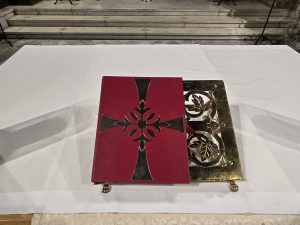
 Several weeks ago, I arrived here at Trinity too early for the late service, but too late for the education offering, so I sat down in the nave and watched the sacristans setting things up. I noticed that the Gospel Book for a while was not placed squarely on its stand, but was off to one side. Now, to be fair, it didn’t remain that way: it was soon picked up by the acolyte who carried it in the procession and, when she later replaced it on the stand, it was centered. Nonetheless, it reminded me of the director of the Altar Guild in the first church I served as a priest, a lady named Jackie.
Jackie was a stickler when it came to the set up of the altar. The candles’ bases had to be placed exactly two inches in from each end of the altar, exactly two inches back from the front edge; the linens had to be placed just so; the chalice had to be centered; the veil on the chalice had to be draped evenly; the orphrey band on the veil had to be centered and, if it had a directional design, that design had to be running the proper direction.
With Jackie, there was no other way. There was no easier or more relaxed way to do things. No middle ground. No compromises.
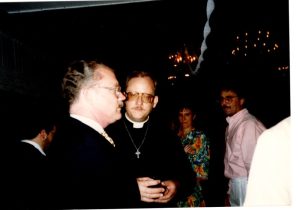 I am not preaching today, the 35th anniversary of my ordination to the priesthood. If I were, I might offer something like this, but then again I might not. These are simply my thoughts apropos of today’s gospel lesson (Matthew 10:24-39) in light of the day. Particularly Jesus disturbing statement, “Do not think that I have come to bring peace to the earth; I have not come to bring peace, but a sword…. and one’s foes will be members of one’s own household.”
 Their names were Curtis Adams, Mager Bradley, George Davis, Jr., Thomas Forte, Robert Green, James Leatherwood, Nathaniel Moss, George Motten, William Pritchett, James Stewart, and Due Turner. They came from Alabama, Mississippi, West Virginia, Texas, Arkansas. Thrown together by war, they were members of the 333rd Field Artillery Battalion, a segregated African American unit serving in Belgium during World War II. When the Germans began what came to be known as “the Battle of the Bulge” in December 1944, the 333rd stayed in place to support the withdrawal of the mostly white infantry regiments around them. These eleven men were captured by the Waffen-SS in a forest near the town of Wereth; they were tortured and murdered, and their bodies left unburied. Although the fact and nature of their sacrifice was well documented, it was never officially recognized by the U.S. government until 2017.
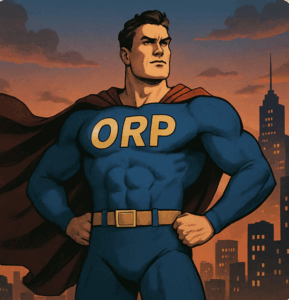
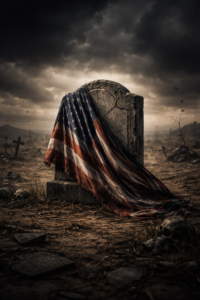 I asked ChatGPT’s image generator, “What sort of image would you create to illustrate the concept of a dead nation?” and this is what it produced.
  There is an aphorism about preaching that says the preacher “must hold the Bible in one hand and the newspaper in the other.” This is often attributed to the influential Swiss theologian Karl Barth, whom Time Magazine in the 1960s called “the greatest living Protestant theologian.” Truth is, however, that he never really said it. What he actually said, in an interview with Time in 1963, was, “Take your Bible and take your newspaper, and read both. But interpret newspapers from your Bible.”
 I assume that everyone here has seen A Christmas Story?
 “You are the light of the world. … [L]et your light shine before others, so that they may see your good works and give glory to your Father in heaven.”
 I’m sure you’re all familiar with Howard Thurman’s meditation entitled The Work of Christmas:
 In any event, I know that Mother Lisa has been over all of that with them, so this sermon is not for them. It’s for you, their family and friends; it’s about their marriage, but it’s for you.
 Do you all know what a tort is? Tort … T-O-R-T … no E on the end; I’m not talking about those wonderful little German or Austrian pastries. A tort is a civil wrong that causes harm to another person, resulting in legal liability for the person who commits the wrong. You leave a puddle of milk on the floor of your grocery store knowing it’s there, then someone slips in it and injures themselves: you have committed a tort. You speed through a stop sign, collide with another car, and injure the driver: you’ve not only broken the law, you’ve committed a tort.

